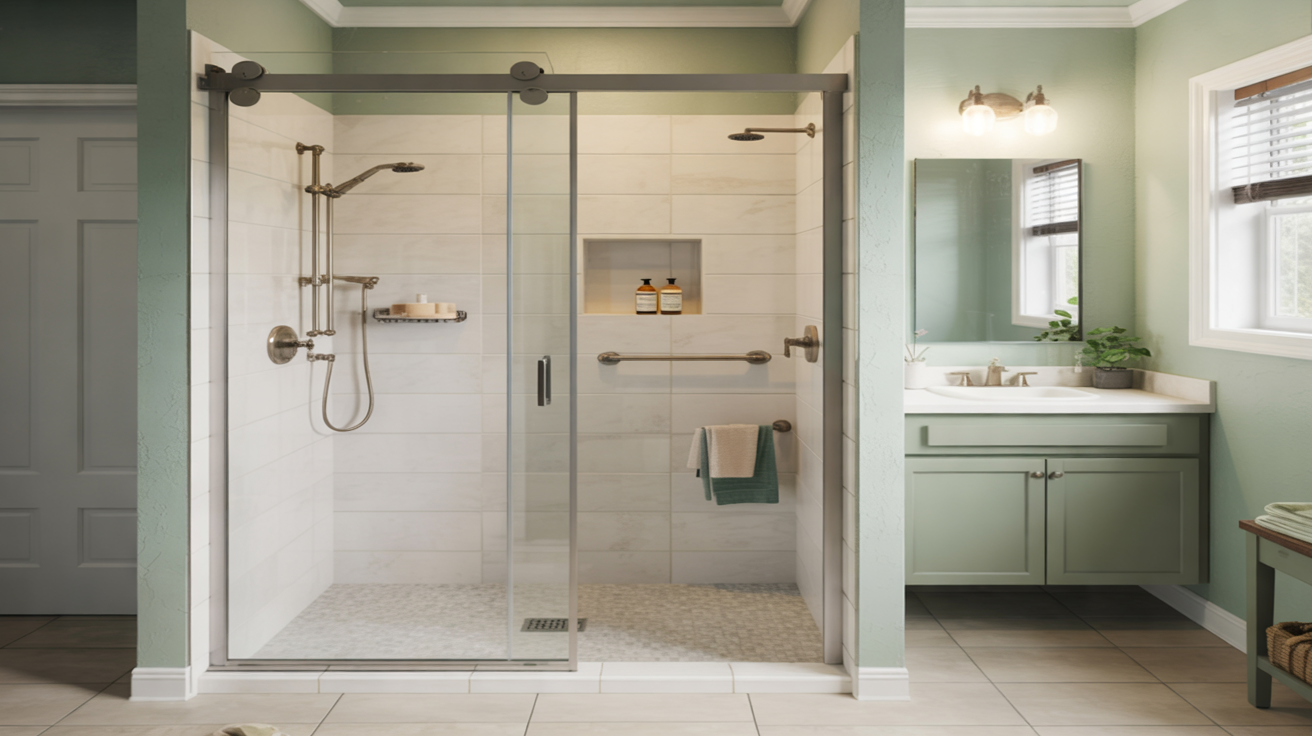
Planning to stay in your Palm Bay home as you age means making your bathroom safer, easier to use, and less stressful to maintain. Shower replacement for aging in place focuses on preventing falls, reducing strain on joints, and creating a layout that works for today and the future.
This page walks through the key design choices, safety features, and planning steps to help you upgrade your shower for long-term independence.
Why Update Your Shower for Aging in Place?
Bathrooms are one of the most common places for slips and falls, especially for older adults. A well-planned shower replacement can:
- Lower fall risk with non-slip surfaces and sturdy grab bars.
- Make bathing easier with a low step or no-threshold entry.
- Reduce bending and reaching through smart storage and valve placement.
- Accommodate mobility changes, including walkers, wheelchairs, or a caregiver’s assistance.
- Cut down on cleaning with simple, low-maintenance wall and floor materials.
Designing with aging in place in mind doesn’t mean your bathroom has to look clinical. Many safety upgrades can blend into a stylish, modern shower.
Key Safety Features for Aging-in-Place Showers
Several features work together to create a safer shower. Here are the most important elements to consider when you plan a replacement.
Low-Threshold or Barrier-Free Entry
Stepping over a tall tub or curb gets harder with age. A low-threshold or barrier-free shower minimizes this risk:
- Low-threshold showers: A short curb that is much easier to step over than a traditional tub.
- Barrier-free (curbless) showers: No step at all, allowing walker or wheelchair access and easier caregiver assistance.
To compare options, see Low-Threshold and Barrier-Free Showers for Accessibility.
Non-Slip Flooring and Surfaces
Flooring should provide traction even when wet. Look for:
- Textured shower pans or bases designed for slip resistance.
- Smaller floor tiles with more grout lines, if tile is used.
- Non-slip mats that are designed for wet areas and can be secured safely.
Learn more about specific options at Non-Slip and Safety Features for New Showers.
Grab Bars and Reinforced Walls
Properly installed grab bars provide support when standing, turning, or stepping in and out of the shower. For aging in place, consider:
- A vertical grab bar at the entry for safe stepping in and out.
- A horizontal bar along at least one long wall for steadying while standing.
- A grab bar near any built-in bench or seat to assist in sitting and standing.
Reinforcing shower walls during replacement allows you to add or move grab bars later if your needs change.
Shower Seating
Sitting while showering can reduce fatigue and make bathing safer. Options include:
- Built-in benches that are integrated with the shower walls.
- Fold-down seats that save space when not in use.
- Freestanding shower chairs designed for wet environments.
Design Choices That Make Daily Use Easier
Beyond safety, small design details can make your shower more comfortable and convenient as you age.
Shower Controls and Handheld Sprayers
Placing controls within easy reach and using a handheld showerhead can make a big difference:
- Install controls where they can be reached from outside the shower entry, so you can turn water on without getting wet.
- Choose a handheld showerhead on a slide bar, which lets you adjust height and use it while seated.
- Consider pressure-balanced or thermostatic valves to reduce sudden temperature changes.
For more on plumbing-related upgrades, visit Plumbing Upgrades to Consider During Shower Replacement.
Easy-Reach Storage and Niches
Reaching down or stretching up for shampoo bottles can strain your back and increase fall risk. Plan for:
- Built-in niches or shelves between waist and shoulder height.
- Corner shelves that don’t stick out into walk paths.
- Stable, non-slip surfaces for bottles to prevent spills.
Doors vs. Curtains for Accessibility
Your choice of shower enclosure affects how easy the shower is to access:
- Shower doors can offer a sleek look and contain water well, but the frame and track must not create a tripping hazard.
- Shower curtains can be easier for caregivers to work around and may better accommodate mobility aids.
Explore the pros and cons in more detail at Choosing Shower Doors vs Shower Curtains After a Replacement.
Material Choices for Low Maintenance
As you plan to stay in your home long term, low-maintenance materials can cut down on scrubbing and upkeep.
Wall and Floor Materials
Common shower wall and base materials for aging in place include:
| Material Type | Benefits for Aging in Place |
|---|---|
| Acrylic or solid-surface panels | Few or no grout lines, easier to clean, can be textured for slip resistance. |
| Ceramic or porcelain tile | Custom look and sizing; choose small, textured tiles for better traction. |
| Fiberglass bases | Lightweight and often pre-sloped; look for non-slip textures. |
To compare material types, see Acrylic vs Tile Showers: Which Is Best for Your Bathroom?
Materials that resist mold and mildew make regular cleaning simpler. You can read more at Mold and Mildew Resistant Shower Materials and Post-Installation Care and Cleaning for New Showers.
Planning Your Aging-in-Place Shower Replacement
Aging-in-place projects are easiest when you plan ahead. Consider the following steps as you get started in Palm Bay, FL.
1. Think About Future Needs
Even if you are moving well today, it is smart to plan for reduced mobility, balance changes, or the need for a caregiver. Design the shower so it can be used:
- With a walker or small wheelchair, if necessary.
- With enough space for another person to assist safely.
- With grab bars and seating, even if you do not use them right away.
2. Decide on the Type of Replacement
Your current bathroom layout will help determine which replacement option fits best:
- Tub-to-shower conversion for replacing a tall tub with a walk-in shower.
- Walk-in shower replacement if you already have a shower but need better access and safety features.
- Full shower replacement when the existing space has water damage, outdated plumbing, or poor layout.
For deeper comparisons, visit Tub-to-Shower Conversion vs Full Shower Replacement and Types of Replacement Showers: Walk-In, Tub-to-Shower, and More.
3. Understand Timeline, Cost, and Financing
Many aging-in-place shower projects can be completed relatively quickly, depending on complexity and materials. These resources can help you plan:
- Shower Replacement Cost Guide for typical cost factors.
- Affordable Shower Remodel Financing Options if you want to spread out payments.
- How Long Does a Shower Replacement Take? and Shower Replacement Timeline and Planning Worksheet for scheduling.
Working With a Professional in Palm Bay
Aging-in-place projects benefit from experienced planning and installation. Professional installers can help you:
- Position grab bars, seating, and controls for comfort and safety.
- Ensure proper waterproofing and drainage to prevent leaks and damage.
- Choose materials suited to Palm Bay’s climate and your cleaning preferences.
Use Hiring a Shower Replacement Contractor: Questions to Ask to prepare for consultations, and see DIY vs Professional Shower Replacement if you are deciding how much work to do yourself.
FAQs About Shower Replacement for Aging in Place
Do I need a barrier-free shower, or is a low threshold enough?
It depends on your current and expected mobility. If you use or may use a walker or wheelchair, or expect to have caregiver assistance in the shower, a barrier-free design often works best. If you are steady on your feet and simply want a safer step-in, a low-threshold shower can still greatly reduce fall risk.
Can an aging-in-place shower still look modern and stylish?
Most safety features can be integrated into attractive designs. Grab bars can match your fixtures, benches can be tiled or finished to blend in, and low-threshold entries can look sleek and contemporary.
When should I start planning an aging-in-place shower?
It is wise to plan before mobility issues become urgent. Replacing your shower now gives you time to choose designs and materials calmly and to spread costs if needed. It also means your bathroom is ready should your needs change quickly.
For more common questions, you can also visit Shower Replacement FAQs and Shower Replacement Financing FAQs.