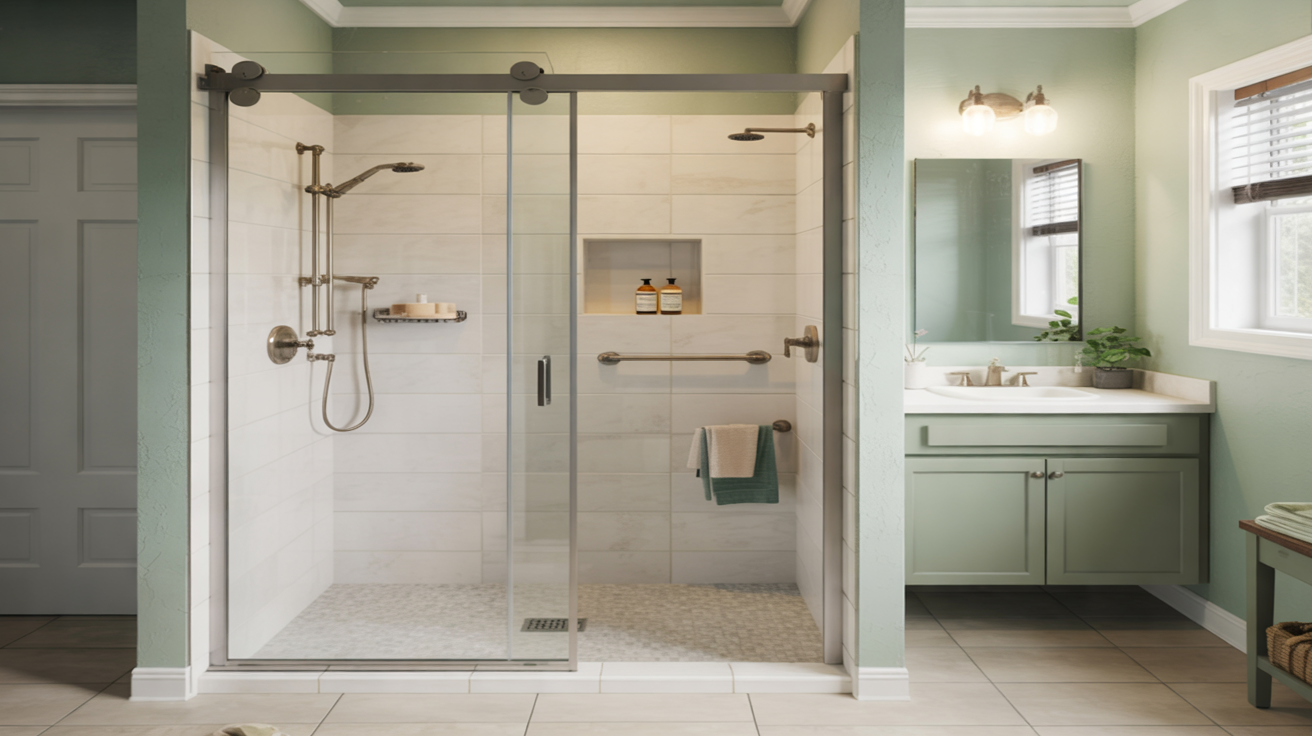
Financing a shower replacement can feel confusing, especially if this is your first major bathroom project. This page answers the most common questions Palm Bay homeowners ask about paying for a new shower over time instead of all at once.
Use these FAQs to understand your options, what lenders look for, and how to decide if financing is the right move for your home and budget.
How shower replacement financing usually works
Most shower replacement projects are financed through third-party lenders rather than directly by the installer. The contractor helps connect you with a lender that offers home improvement loans, but the loan itself is between you and the finance company.
In a typical setup, the lender pays the contractor, and you repay the lender in fixed monthly payments over a set term (for example, 24, 48, or 60 months). You get your new shower now and spread the cost out over time.
Common types of financing you may see
- Unsecured home improvement loan: No home equity required. Approval is based mainly on your credit and income.
- Credit-based installment plan: Fixed monthly payments with a set payoff date.
- Promotional plans: Sometimes offer low or deferred interest for an introductory period if certain conditions are met.
Financing options, rates, and terms vary by lender and by your credit profile. Be sure to review any offer carefully before signing.
What lenders typically consider when you apply
Each lender has its own approval criteria, but most will look at some combination of:
- Your credit score and credit history
- Your income and employment situation
- Your existing monthly debts (like car payments, credit cards, or other loans)
- The total amount you want to finance
Having strong credit and a steady income can help you qualify for better terms, but many lenders also offer options for homeowners with fair or average credit. You can ask what credit range a lender typically works with before applying.
Benefits and drawbacks of financing a shower replacement
Before you decide, it helps to look at both sides of financing a project like this.
Potential advantages
- Lower upfront cost: You don’t have to delay your project until you have the full amount in savings.
- Predictable payments: Fixed monthly payments make it easier to plan your budget.
- Can address urgent needs: Helpful if your shower is leaking, unsafe, or needs accessibility upgrades now.
- May protect savings: Allows you to keep an emergency fund instead of emptying it for the project.
Potential downsides
- Interest cost: You’ll typically pay more over time than if you paid in full upfront.
- Monthly obligation: A new payment becomes part of your regular bills.
- Approval isn’t guaranteed: Some homeowners may not qualify for the amount or rate they want.
If you want help estimating your total project investment before exploring financing, the Shower Replacement Cost Guide can be a useful starting point.
FAQ: Common financing questions from Palm Bay homeowners
Do I have to use the contractor’s financing program?
No. You can choose to:
- Use a lender recommended by your shower contractor
- Apply through your own bank or credit union
- Use other personal financing you already have arranged
Comparing total costs and terms from more than one source can help you decide what’s best for you.
Can I finance part of the project and pay the rest in cash?
In many cases, yes. Some homeowners use financing to cover most of the project and pay the difference out of pocket. Ask the lender and your contractor how they handle mixed payment methods before work begins.
Is a down payment required?
Some lenders and contractors may require a down payment, while others offer 100% project financing for qualified homeowners. A down payment, when allowed, can reduce your monthly payment and total interest.
How long are typical repayment terms?
Repayment terms vary by lender and by the size of your project. Many home improvement loans offer terms from about 2 to 10 years. Shorter terms usually mean higher monthly payments but less total interest; longer terms mean lower monthly payments but more interest over time.
Can I pay off my loan early?
Some loans allow early payoff without penalty, while others may charge a fee. Before you sign, read the loan agreement and ask directly whether there is any prepayment penalty if you choose to pay off the balance ahead of schedule.
What if my credit isn’t perfect?
Different lenders specialize in different credit ranges. If your credit has some dings, you may still have options, but the interest rate could be higher. You can:
- Ask what minimum scores or guidelines a lender uses
- Consider applying with a co-borrower if appropriate
- Adjust your project scope to stay within a comfortable monthly payment
Will financing cover accessibility upgrades?
In many cases, shower financing can include features that improve safety and accessibility, such as low-threshold entries, grab bars, benches, and handheld showerheads. To learn more about planning an accessibility-focused project, see Low-Threshold and Barrier-Free Showers for Accessibility and Shower Replacement for Aging in Place.
Can I include luxury upgrades in my financed amount?
Depending on the lender’s guidelines and your approval amount, you may be able to finance design upgrades such as rainfall showerheads, niches, and benches. For ideas on what to include, explore Luxury Shower Upgrades: Rainfall Heads, Niches, and Benches.
What if my shower project uncovers hidden problems?
Occasionally, removing an old shower reveals issues like rot or outdated plumbing. Your final project cost may change if extra repairs are needed. It’s wise to:
- Ask how change orders are handled
- Confirm whether your financing amount can be adjusted if the project scope changes
- Keep a small cushion in your budget for the unexpected
For more on potential problems and how to plan for them, visit Common Shower Replacement Problems and How to Avoid Them.
How do I know if financing is right for me?
Consider these questions:
- Is your current shower leaking, unsafe, or unusable?
- Would delaying the project cause more damage or limit your mobility?
- Can you comfortably afford the potential monthly payment, even if other bills change?
- Do you have enough savings to pay in full without straining your emergency fund?
You can also review general project planning advice in the Step-by-Step Shower Replacement Checklist for Homeowners and Shower Replacement Timeline and Planning Worksheet.
How financing ties into your overall shower project
Financing is just one part of a successful shower replacement. You’ll also want to think about:
- Materials: Acrylic, tile, or other options each have different costs and maintenance needs. Compare them in Acrylic vs Tile Showers: Which Is Best for Your Bathroom?
- Project scope: Simple updates cost less than full redesigns. Explore different project types in Types of Replacement Showers: Walk-In, Tub-to-Shower, and More.
- Contractor selection: The installer you choose matters for both quality and long-term value. See Hiring a Shower Replacement Contractor: Questions to Ask.
Thinking through these areas while you review financing options can help you choose a project plan that fits both your bathroom and your budget.
Next steps for exploring shower replacement financing
If you’re just starting to research, you may want to:
- Estimate your desired project scope and features.
- Review cost ranges in the Shower Replacement Cost Guide.
- Read about Affordable Shower Remodel Financing Options for an overview of common loan types.
- Gather basic financial information (income, debts, and approximate credit score) so you’re ready to discuss potential offers.
When you’re ready to move forward with a project in Palm Bay, you can contact a local shower replacement professional to discuss design, schedule, and payment options in more detail.