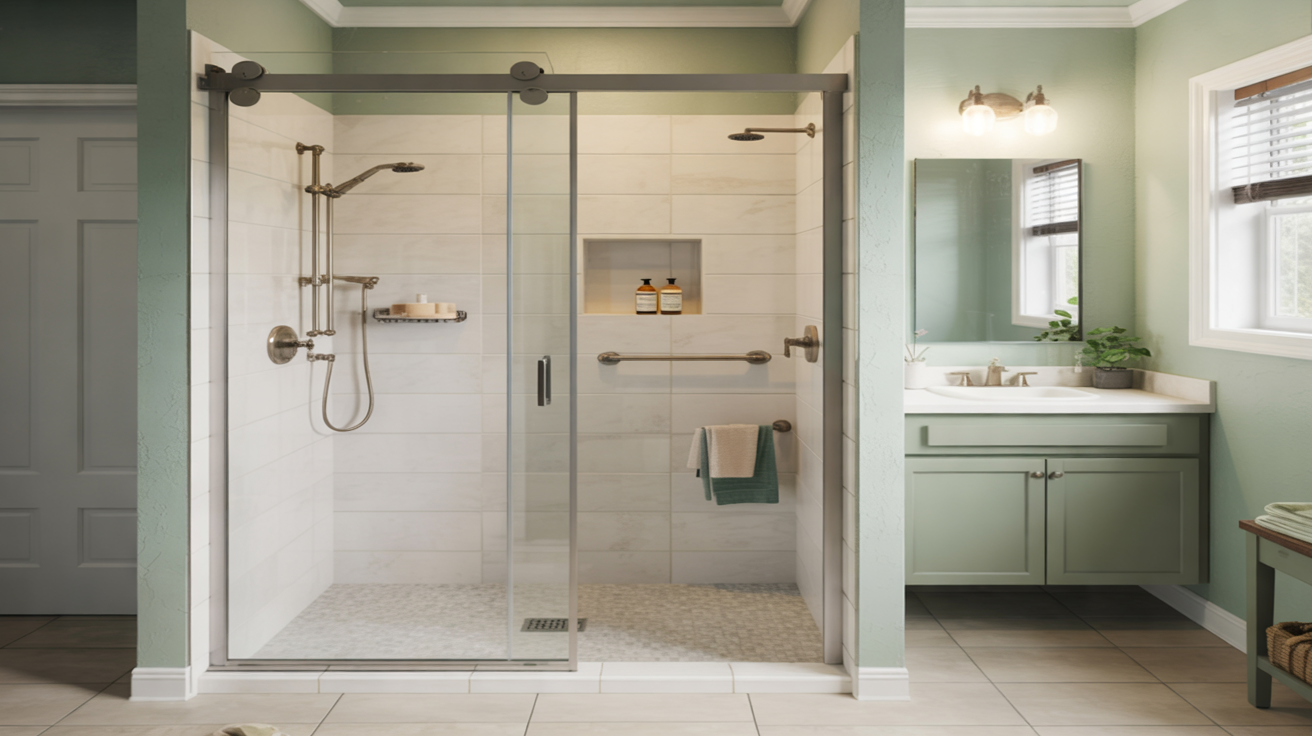
Slippery shower floors, tight spaces, and water splashing everywhere are common causes of bathroom accidents. When you plan a new shower, it is the perfect time to build in non-slip and safety features so your bathroom is more comfortable today and easier to use as you age. This page walks through the main options, how to combine them, and what to discuss with your shower replacement contractor in Palm Bay, FL.
Key Non-Slip and Safety Features for New Showers
Modern showers can look stylish while also being much safer than older tub-shower combos. The features below are the main building blocks of a safer shower design.
Textured, Non-Slip Shower Bases
The shower base (or pan) is the first place to focus on slip resistance. Instead of smooth porcelain or glossy tile, choose a base with a built-in texture.
- Textured acrylic or composite pans: Many replacement shower systems use acrylic or composite materials with molded textures that improve traction even when wet.
- Non-slip coatings: Some bases can be factory-treated or professionally coated with a non-slip surface for extra grip.
- Grout-free options: A single-piece base eliminates grout lines where soap scum can build up and become slippery.
If you are comparing finishes, ask which options meet non-slip standards and how the texture feels under bare feet.
Low-Threshold and Walk-In Entries
Stepping over a tall tub wall is one of the riskiest movements in the bathroom. A low entry makes getting in and out much safer.
- Low-threshold showers: These have a short curb you step over, usually just a few inches high, instead of a full tub wall.
- Barrier-free entries: With the right waterproofing and slope, some showers can be built with a nearly flush, step-free entrance.
For more detail on entry options, see Low-Threshold and Barrier-Free Showers for Accessibility.
Grab Bars and Support Rails
Grab bars are one of the most effective safety upgrades you can add.
- Vertical grab bars near the entrance help with stepping in and out.
- Horizontal bars along the side walls provide balance while standing and moving.
- Angled bars are useful near benches or seats for easier sitting and standing.
Have your contractor install blocking behind the walls during your shower replacement so grab bars can be added now or in the future without opening the wall again.
Built-In Benches and Shower Seats
A place to sit improves safety and comfort, especially for anyone with mobility or balance issues.
- Built-in benches: Permanent benches can be built into the wall or corner and finished to match the shower.
- Fold-down seats: Wall-mounted seats fold away when not in use, ideal for smaller showers.
- Sturdy portable stools: If blocking is in place and the layout is planned correctly, you can start with a movable seat and upgrade later.
For long-term planning, these features are often combined with other upgrades discussed on Shower Replacement for Aging in Place.
Slip-Resistant Flooring Outside the Shower
Safety should extend beyond the shower itself. Wet feet make bathroom floors slippery.
- Choose matte or textured tiles or other slip-resistant flooring for the bathroom floor.
- Use a rubber-backed bathmat that lies flat and does not slide.
- Plan for good drainage and a proper shower door or curtain to keep water from splashing across the room.
Smart Layout Choices That Improve Safety
Beyond materials and fixtures, the way your shower is arranged affects how safe it feels day to day.
Safe Placement of Shower Controls
Locating the controls in the right place keeps you from reaching or leaning dangerously.
- Place the valve where it can be reached from outside the spray area so you can turn on the water without stepping in.
- Consider pressure-balanced or thermostatic valves to help prevent sudden temperature changes.
- Mount controls at a height that works for both standing users and seated users if you are adding a bench.
If you are already planning plumbing changes, see Plumbing Upgrades to Consider During Shower Replacement.
Lighting and Visibility
Good lighting reduces the chance of missteps and helps everyone see water on the floor.
- Add bright, even lighting over the shower area.
- Use clear or lightly frosted glass to let more light reach the shower floor.
- Consider night lights or motion-activated lighting for safe trips to the bathroom after dark.
Door, Curtain, and Entry Options
The way you close off the shower affects both water control and safety.
- Frameless or semi-frameless doors can minimize tripping points and are easier to clean than doors with heavy frames.
- Sliding doors reduce the need to step around a swinging panel in tighter spaces.
- Curved shower rods or doors can create a little more elbow room, which reduces bumping into walls and fixtures.
For more ideas, compare options on Choosing Shower Doors vs Shower Curtains After a Replacement.
Choosing Safe Materials and Finishes
Your choice of wall and floor materials also plays a role in safety and upkeep.
Walls and Grout
Grout lines and porous surfaces can collect soap scum and mildew, which make surfaces slippery and require more aggressive cleaning.
- Acrylic wall systems are popular for a sleek, grout-free surface that is easier to keep clean.
- Larger-format tiles mean fewer grout lines and smoother footing if you choose a tile shower.
- Mold- and mildew-resistant materials improve hygiene and reduce the need for harsh cleaners. Learn more at Mold and Mildew Resistant Shower Materials.
If you are comparing acrylic surrounds with tile work, you may find Acrylic vs Tile Showers: Which Is Best for Your Bathroom? helpful.
Fixtures and Hardware
Small decisions in fixtures can make everyday use safer.
- Handheld showerheads on a slide bar let you rinse while seated or control direction to avoid spraying the floor.
- Lever-style handles are easier to grip than round knobs, especially with wet or soapy hands.
- Rounded hardware and corners reduce the risk of bumps and bruises in a smaller shower.
Planning a Safer Shower Replacement in Palm Bay
A shower replacement is a chance to correct safety issues and design for future needs, not just update the look.
Steps to Plan Your Safety Upgrades
- List your concerns. Think about who uses the shower today and who might use it in the future. Balance, knee or hip issues, and young children all change your priorities.
- Measure carefully. The size of your bathroom and the shower footprint will influence which non-slip and safety features are realistic.
- Prioritize essentials. Most homeowners start with a non-slip base, low-threshold entry, and at least one grab bar.
- Discuss options with a pro. Talk through layout, blocking for future grab bars, bench placement, and plumbing changes with your shower replacement contractor.
- Plan your budget. Safer features can often be worked into a range of budgets. For guidance, see the Shower Replacement Cost Guide and Affordable Shower Remodel Financing Options.
For a bigger-picture look at the process, visit Step-by-Step Shower Replacement Checklist for Homeowners or learn how long the work typically takes at How Long Does a Shower Replacement Take?.
FAQs About Non-Slip and Safety Features for Showers
Are non-slip coatings enough on their own?
Non-slip coatings can help, but they work best when combined with a textured base and good maintenance. If you are investing in a full replacement, choosing a shower pan with an integrated non-slip surface usually provides more reliable, long-term traction.
Do grab bars make my bathroom look “institutional”?
Modern grab bars come in many finishes and styles that blend with standard bathroom hardware. When planned from the start, they can look like part of the design rather than an afterthought.
Can I add safety features later if I skip them now?
Some items, like portable shower seats and non-slip mats, can be added at any time. However, features that need wall support, such as grab bars and fold-down seats, are much easier and cleaner to add during the shower replacement when walls are open.
Is a low-threshold shower better than a tub-shower combo for safety?
For most people, especially older adults or those with limited mobility, stepping over a short curb is significantly safer than climbing over a high tub wall. If you are trying to decide between replacing the tub or converting to a walk-in, see Tub-to-Shower Conversion vs Full Shower Replacement.
Where can I learn more before starting my project?
You can explore more planning topics on the Blog, review Shower Replacement FAQs, or learn about different shower types at Types of Replacement Showers: Walk-In, Tub-to-Shower, and More. When you are ready to move forward, a professional can help you choose the right combination of safety, style, and budget for your Palm Bay home.