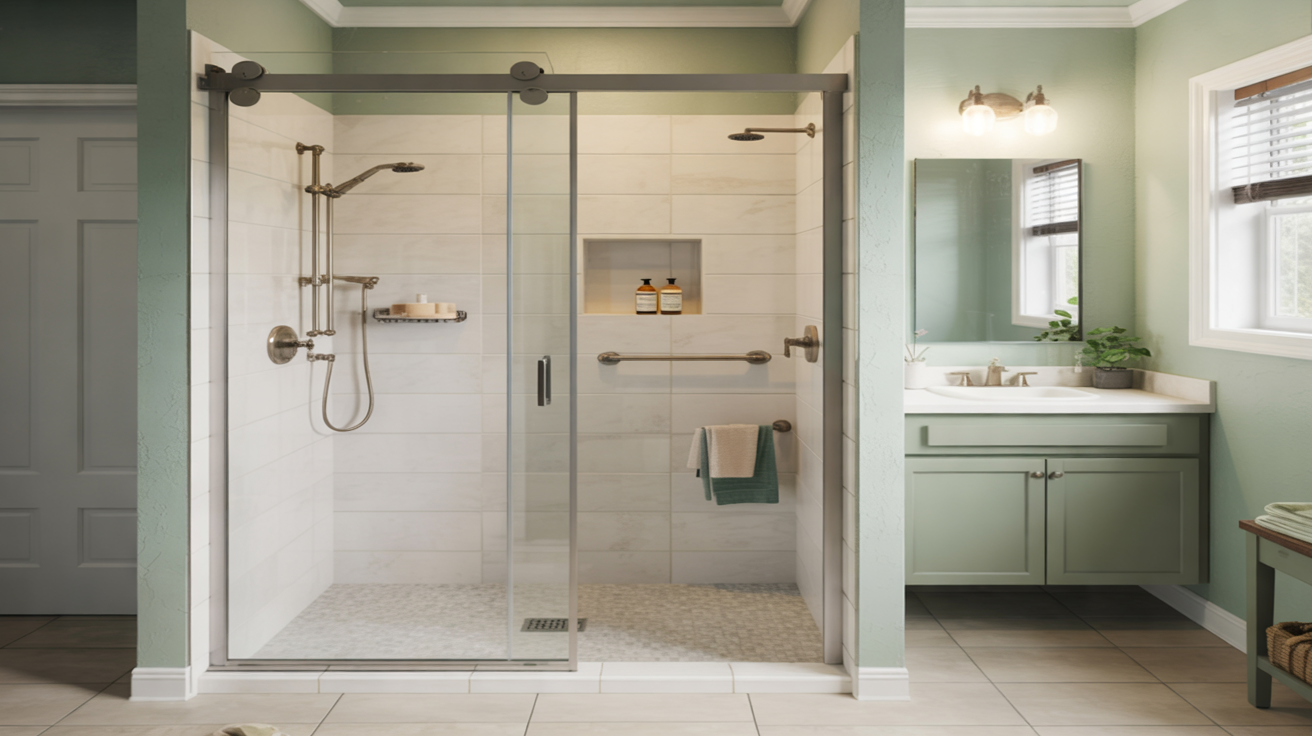
Choosing between an acrylic shower and a tiled shower is one of the biggest design and budget decisions in a bathroom remodel. Both can look beautiful and perform well, but they differ in cost, maintenance, installation, and long-term durability. The right choice depends on how you use your bathroom, your style preferences, and how much time you want to spend on upkeep.
Below, you’ll find a practical comparison to help you decide which is the better fit for your Palm Bay, FL home, plus tips to think through before starting a shower replacement.
What Is an Acrylic Shower?
An acrylic shower is made from molded acrylic panels or a one-piece shell. The material is non-porous, smooth, and lightweight. Acrylic shower systems typically include walls, a shower base, and sometimes built-in shelves or seating.
Main advantages of acrylic showers
- Fast installation: Many acrylic systems can be installed in as little as a day, especially during a straightforward replacement.
- Lower maintenance: With no grout lines and a non-porous surface, acrylic is easier to keep clean.
- Budget-friendly: Material and labor costs are usually lower than custom tile.
- Warm to the touch: Acrylic tends to feel warmer underfoot than tile, which is noticeable during cooler mornings or with strong air conditioning.
Potential drawbacks of acrylic showers
- Fewer custom details: You can choose different colors, patterns, and accessories, but you will not have the near-limitless layout options that tile offers.
- Susceptible to scratches: Harsh cleaners or abrasive pads can dull the surface over time if not maintained properly.
- Looks: High-quality acrylic can still look modern and attractive, but some homeowners prefer the texture and character of real tile.
What Is a Tile Shower?
A tile shower uses ceramic, porcelain, or natural stone tiles on the walls and often on the shower floor. Tile showers are built on top of a properly waterproofed base and wall system, then finished with grout between each tile.
Main advantages of tile showers
- Highly customizable: You can mix tile sizes, shapes, colors, and patterns for a truly one-of-a-kind look.
- Premium appearance: Tile is often associated with upscale, spa-like bathrooms and can add perceived value.
- Very durable surface: Quality porcelain or ceramic tile stands up well to daily use and cleaning.
Potential drawbacks of tile showers
- More maintenance: Grout must be cleaned regularly and may need to be resealed to resist stains and mildew.
- Higher cost: Tile materials plus skilled installation usually cost more than acrylic.
- Longer installation time: Surface preparation, waterproofing, setting tile, and curing all extend the project timeline.
Acrylic vs Tile Showers: Side-by-Side Comparison
| Factor | Acrylic Shower | Tile Shower |
|---|---|---|
| Cost | Generally lower overall cost | Typically higher due to materials and labor |
| Installation time | Often 1–2 days once prep is done | Several days to over a week, depending on complexity |
| Customization | Multiple sizes, colors, and patterns; more limited layout options | Extensive design flexibility with patterns, niches, and borders |
| Maintenance | Easy to wipe down; no grout lines | Requires grout cleaning and periodic sealing |
| Durability | Durable but can scratch if cleaned with abrasives | Tile is very durable; grout is the vulnerable point |
| Mold & mildew resistance | Non-porous surface, fewer places for mold to grow | Grout can stain or harbor mildew without proper care |
| Resale appeal | Modern, clean, and practical | Often seen as a luxury feature when well executed |
Which Shower Type Fits Your Bathroom and Lifestyle?
Both acrylic and tile can be excellent choices in Palm Bay. The “best” option depends on what matters most to you day to day.
Choose acrylic if you want:
- Low-maintenance surfaces: Ideal if you do not want to scrub grout joints or worry about sealing.
- Faster project timelines: Helpful if you have only one full bathroom or cannot be without a shower for long. To understand how schedules work, see the shower replacement timeline page.
- Predictable costs: Acrylic systems are usually easier to estimate than fully custom tile designs.
- Family-friendly durability: Smooth surfaces are easy to wipe down after kids’ baths or sandy beach days.
Choose tile if you want:
- A custom, designer look: Tile is ideal when your goal is a showpiece bathroom.
- Precise layout flexibility: Great for odd-shaped spaces, unique niches, and built-in benches.
- Premium finishes: Pairs well with luxury upgrades like rainfall showerheads, recessed niches, and bench seating. Explore ideas on the luxury shower upgrades page.
- Long-term investment: A high-quality tile job can serve your home well for many years when properly maintained.
Performance in a Humid Palm Bay Climate
Humidity and frequent shower use can stress any bathroom. Waterproofing and ventilation matter as much as surface material.
- Acrylic showers: The non-porous material resists water absorption, and with fewer seams, there are fewer places for moisture to sneak behind the walls. Correctly sealed joints and a solid shower base are still essential.
- Tile showers: Tile itself is water-resistant, but the underlying waterproofing must be well designed. Properly installed membranes and careful attention to corners and transitions help avoid leaks. Learn more about this on the waterproofing and leak prevention page.
In both cases, an exhaust fan, adequate air circulation, and regular cleaning will extend the life of your shower and reduce mold and mildew issues. For a closer look at materials that can help, visit the mold and mildew resistant shower materials page.
Cost, Financing, and Project Planning
Acrylic showers usually keep the budget more predictable, while tile gives you more opportunities to upgrade finishes and details. Your total cost will depend on the size of the space, plumbing changes, accessibility features, and fixture selections.
For a breakdown of what affects pricing in Palm Bay, visit the shower replacement cost guide. If you are considering spreading payments out over time, the affordable shower remodel financing options and financing FAQs pages provide helpful information.
When you are ready to plan, the shower replacement timeline and planning worksheet and step-by-step shower replacement checklist can help you stay organized.
Safety, Accessibility, and Daily Comfort
Whether you choose acrylic or tile, you can incorporate features that make your new shower safer and more comfortable.
- Low-threshold or barrier-free entries: These work well with both materials and make stepping in and out easier, especially for aging in place. See more on the low-threshold and barrier-free showers and shower replacement for aging in place pages.
- Non-slip flooring: Many acrylic bases have textured surfaces, and tile floors can use smaller tiles or slip-resistant finishes. Learn about options on the non-slip and safety features page.
- Grab bars and seating: Both acrylic and tile showers can integrate grab bars and built-in or fold-down benches for comfort and stability.
FAQ: Acrylic vs Tile Showers
Which lasts longer: acrylic or tile?
With proper installation and care, both can have long service lives. Tile itself is extremely durable, but grout and waterproofing need routine attention. Acrylic resists water and staining well, but the surface can scratch if cleaned with abrasive tools. Good installation and regular cleaning are key for either option.
Which is easier to clean?
Acrylic is generally easier because there are no grout joints. A mild, non-abrasive bathroom cleaner and a soft cloth or sponge are usually all that is needed. Tile showers require the same plus grout cleaning and occasional grout sealing to keep them looking fresh.
Can I get a custom look with acrylic?
Yes, to a point. Many acrylic systems offer tile-look patterns, different colors, and accessories like niches and corner shelves. However, tile still offers more layout possibilities and intricate design options.
What if my bathroom is small?
Both materials work well in small bathrooms. Acrylic units can maximize interior space with slim walls and built-in storage, while tile lets you use large-format tiles or light colors to make the room feel bigger. For more ideas, see the small bathroom shower replacement ideas page.
Should I replace my tub with a shower at the same time?
If you are considering a tub-to-shower conversion, it can be efficient to decide on material type (acrylic or tile) at the same time as your layout. The tub-to-shower conversion vs full shower replacement page explains how these projects differ.
Next Steps for Your Shower Replacement in Palm Bay
Once you have a sense of whether acrylic or tile better fits your style, budget, and maintenance preferences, the next step is to plan the details: shower size, door style, fixtures, and storage. You can explore more design options on the custom shower designs and shower doors vs shower curtains pages, or learn what to expect from the process on DIY vs professional shower replacement and one-day shower replacement.
If you are preparing for a project soon, the bathroom preparation guide, shower replacement FAQs, and contractor questions to ask can help you move forward with confidence.